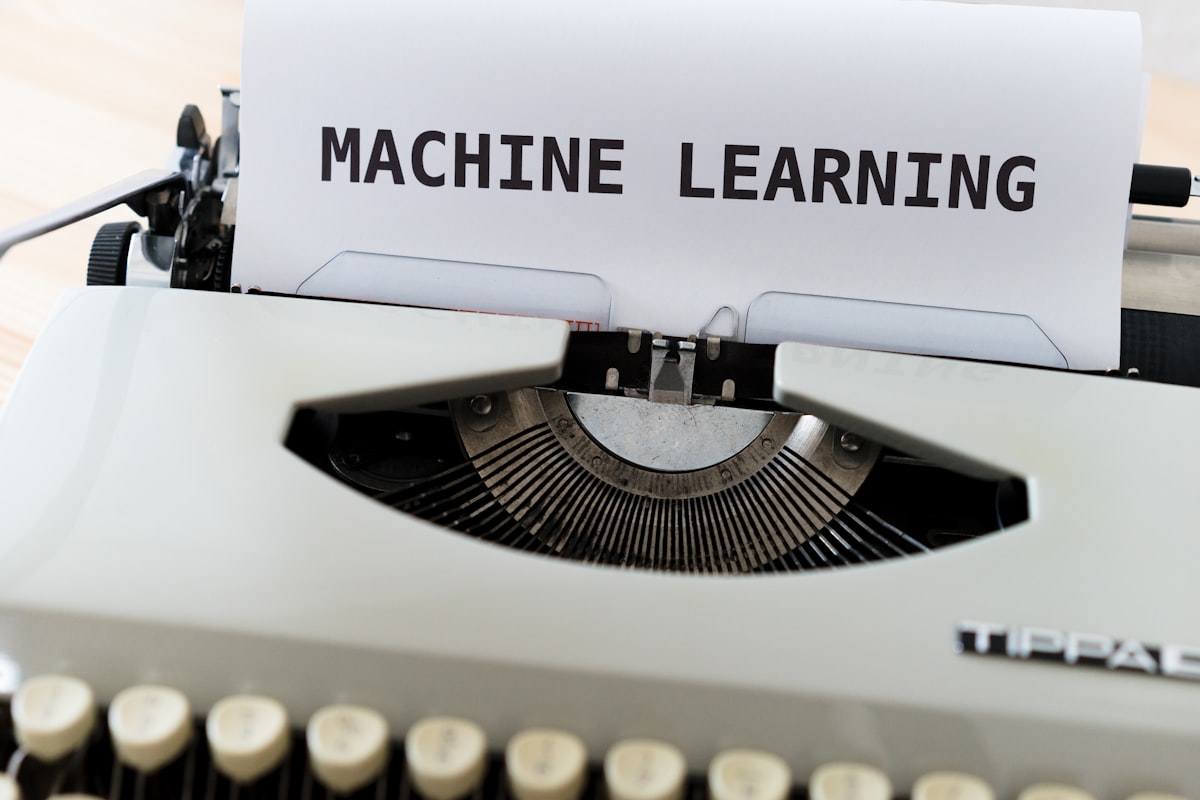
ChatGPT, DeepL, and the end of translators? If you work in life sciences, you have probably heard that question already. AI output can look strikingly fluent, and often it is genuinely impressive. But the conclusion that medical translation is now fully automatable misses what medical translation actually is.
The reality is calmer and more interesting. AI has transformed workflows, but it has not eliminated medical translators. It has removed much of the mechanical work and made the core of the profession more visible: clinical interpretation, risk awareness, and responsibility.
What AI already does exceptionally well
It would be disingenuous to downplay AI strengths. Systems such as DeepL and ChatGPT are excellent at terminology consistency across long documents. In regulatory work, where consistency is mandatory rather than stylistic, this is a genuine advantage.
AI is also highly effective in the drafting phase. A long protocol or safety narrative can be rendered into a coherent draft quickly, allowing the translator to focus on the high-value tasks: verification, interpretation, and refinement.

Where AI still fails, and why that matters
AI limitations emerge when we move beyond grammar and into clinical meaning. Medical language is context-heavy, and small wording shifts can alter the interpretation of findings, uncertainty, or diagnosis status.
A phrase can be fluent and still clinically wrong. “No evidence of recurrence” and “no support for relapse” are not interchangeable in a radiology context. Likewise, “the patient denies chest pain” is a symptom statement, not patient behaviour. These are routine distinctions for trained medical translators.
Core risk: AI can sound confident while being wrong.
Clinical consequence: uncertainty can be flattened into certainty, or intent can shift from observation to diagnosis.
Accountability gap: AI does not carry legal or professional responsibility for those errors.
Why medical translation is hard to automate fully
Medical translation is not only language conversion. It requires judgement about intent, certainty, and professional conventions. A translator working on oncology, radiology, or pharmacovigilance text must continuously interpret whether a statement implies suspicion, confirmation, absence, or unresolved uncertainty.
That layer depends on expertise rather than pattern matching. It is clinical reasoning applied through language.
How professionals use AI in practice
Professional translators are not ignoring AI. Most are already using it. The difference is methodological: AI is treated as an assistant, not an autonomous substitute. It drafts, spots patterns, and accelerates routine sections. The translator then validates meaning, resolves ambiguity, and ensures compliance.
Many teams are also moving towards locally hosted models for sensitive workflows, so confidential medical data remains under controlled infrastructure rather than being sent to external services.
The real future of medical translation
AI brings speed, consistency, and efficiency. Human translators bring understanding, judgement, and accountability. As automation grows, the human role does not disappear; it concentrates around the parts that actually carry risk.
Medical translation has never been only about replacing words. It has always been about preserving meaning where meaning has real-world consequences.
The tools are faster. The responsibility remains human.
← Back to Blog